Endurance Metrics Drive Accumulator Choices in Football, Tennis, Basketball, and Racing
Written by Petra Roth · Nov 8, 2026

Endurance Metrics Drive Accumulator Choices in Football, Tennis, Basketball, and Racing
Endurance metrics provide measurable indicators that shape accumulator selections across football, tennis, basketball and racing, where sustained performance under fatigue often determines outcomes in combined bets. Observers note that data on recovery rates, work rate per minute and late-game consistency help bettors identify patterns that single-sport analysis might overlook, particularly as the 2026 calendar moves into November with overlapping seasons in Europe and North America.
Researchers tracking player and athlete workloads find that endurance thresholds correlate with reduced error rates in extended matches and races, turning these figures into practical tools for multi-leg wagers. Data from professional leagues shows that teams and individuals maintaining above-average stamina metrics secure better results in the final quarters or sets, which directly influences accumulator viability when legs from different sports are combined.
Football Applications
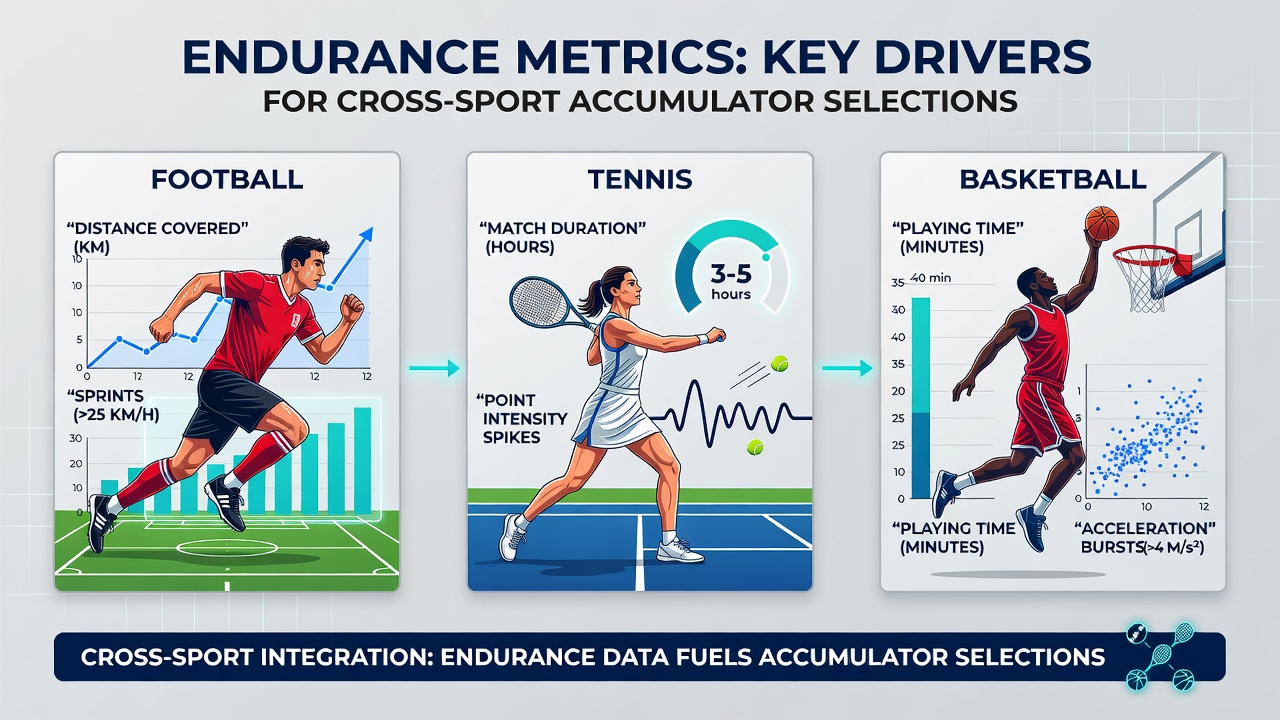
Football squads publish high-resolution GPS and heart-rate data that reveal how midfielders and full-backs sustain pressing intensity across ninety minutes plus stoppages. Analysts compare these outputs against fixture congestion schedules, noting that clubs with superior squad rotation depth preserve higher endurance scores during November double-headers. Accumulator builders therefore cross-reference team-level stamina rankings with opposing defensive structures, creating selections where late-match goal probabilities rise when endurance gaps appear between sides.
Tennis and Basketball Overlaps
Tennis players log set-by-set rally lengths and movement distances that highlight fatigue onset after two hours of play, while basketball rosters track high-speed running volume and defensive slide counts per quarter. Studies indicate that both sports reward athletes who maintain serve-hold percentages or three-point accuracy in the final stages, metrics that endurance models quantify reliably. Bettors constructing accumulators frequently pair a tennis player’s late-set hold rate with a basketball team’s fourth-quarter defensive efficiency, since both figures stem from comparable physiological recovery profiles documented in training logs.
Racing Integration
Horse racing form guides now incorporate sectional timing and stride-frequency data collected over final furlongs, metrics that mirror the late-race stamina demands seen in other endurance sports. Trainers report that horses posting consistent closing splits on varying ground conditions carry forward performance edges into subsequent starts, especially when campaigns extend into late autumn. These figures slot into accumulators alongside football or basketball legs because the underlying recovery physiology shares common markers with human athletes, allowing statistical models to weight each component by comparable fatigue resistance.
Cross-Sport Accumulator Construction
Industry reports from the Australian Sports Commission illustrate how multi-sport endurance datasets improve prediction accuracy when legs are sequenced by shared recovery timelines rather than isolated results. Bettors examine November schedules where football midweek fixtures, tennis indoor tournaments, basketball back-to-backs and racing festivals coincide, then filter selections for athletes and teams whose endurance scores exceed seasonal averages. This approach reduces variance in combined odds because each leg’s probability rests on measurable work-rate sustainability instead of short-term form spikes alone.
Additional sources from the National Collegiate Athletic Association research archive confirm that basketball programs using load-management protocols post measurable gains in end-of-season efficiency, patterns that parallel endurance trends observed in European football academies and professional tennis tours. Observers therefore treat these metrics as transferable filters when building accumulators that span continents and disciplines during the congested November window.
Conclusion
Endurance metrics supply a consistent framework for evaluating cross-sport accumulator selections because they quantify fatigue resistance across football, tennis, basketball and racing in comparable units. As seasonal calendars overlap in late 2026, data-driven alignment of these indicators continues to shape how combined bets are structured and assessed by market participants.